|
- Home Testing
-
Services
- Methamphetamine Assessment Process eBook >
- Screening Assessments - Indicative - Step 1 >
- Screening Assessments - Comprehensive - Step 2
- Detailed Site Assessment - Step 3
- Decontamination Company Information and Requirements - Step 4
- Post Decontamination Assessment - Step 5
- Vehicle Testing
- Methamphetamine Contamination Training Seminars
- Expert Witness
- Book a Test
- Qualifications
-
Meth Info
- Meth Calculator
- What is Meth?
- Names for Meth
- Forms / Uses / Ingredients
-
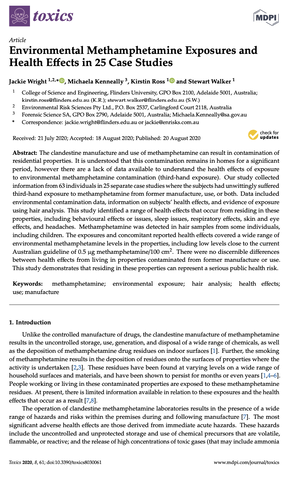
Environmental Methamphetamine Exposures and Health Effects
>
- Meth Case Study One-107ug/100cm2
- Meth Case Study Two-42ug/100cm2
- Meth Case Study Three-0.1ug/100cm2
- Meth Case Study Four-8.3ug/100cm2
- Meth Case Study Five-20.7ug/100cm2
- Meth Case Study Six-1.32ug/100cm2
- Meth Case Study Seven-4.4ug/100cm2
- Meth Case Study Eight-5.7ug/100cm2
- Meth Case Study Nine-53ug/100cm2
- Meth Case Study Ten->100ug/100cm2
- Meth Case Study Eleven-42.9ug/100cm2
- Meth Case Study Twelve-7.8ug/100cm2
- Meth Case Study Thirteen-20ug/100cm2
- Meth Case Study Fourteen-NA
- Meth Case Study Fifteen-0.13ug/100cm2
- Meth Case Study Sixteen-107ug/100cm2
- Meth Case Study Seventeen-45.09ug/100cm2
- Meth Case Study Eighteen-9.9ug/100cm2
- Meth Case Study Nineteen-245ug/100cm2
- Meth Case Study Twenty-31ug/100cm2
- Meth Case Study Twentyone-2ug/100cm2
- Meth Case Study Twentytwo-250ug/100cm2
- Meth Case Study Twentythree-125ug/100cm2
- Meth Case Study Twentyfour-25ug/100cm2
- Meth Case Study Twentyfive-3.5ug/100cm2
- New Zealand Drug and Meth Statistics
- How Homes are Affected >
- Presentations and Interviews >
- Cleaning/Fixing Contaminated Property
- What to Look for
- What To Do
-
Property Owners
- Signs of Meth Use
- Ongoing Protection
- When To Test
-
Useful Links
>
- Meth Xpert Newsletter >
-
Meth Xpert 2019 Newsletters
>
- Meth Xpert Newsletter - Volume 2 Issue 1
- Meth Xpert Newsletter - Volume 2 Issue 2
- Meth Xpert Newsletter - Volume 2 Issue 3
- Meth Xpert Newsletter - Volume 2 Issue 4
- Meth Xpert Newsletter - Volume 2 Issue 5
- Meth Xpert Newsletter - Volume 2 Issue 6
- Meth Xpert Newsletter - Volume 2 Issue 7
- Meth Xpert Newsletter - Volume 2 Issue 8
- Meth Xpert Newsletter - Volume 2 Issue 9
- Meth Xpert Newsletter - Volume 2 Issue 10
- Meth Xpert Newsletter - Volume 2 Issue 11
- Meth Xpert Newsletter - Volume 2 Issue 12
- Meth in the News >
- Meth Testing Standards NZS 8510:2017 >
- Our Partners
- Locations
- Contact Us
- Blog
- Home Testing
-
Services
- Methamphetamine Assessment Process eBook >
- Screening Assessments - Indicative - Step 1 >
- Screening Assessments - Comprehensive - Step 2
- Detailed Site Assessment - Step 3
- Decontamination Company Information and Requirements - Step 4
- Post Decontamination Assessment - Step 5
- Vehicle Testing
- Methamphetamine Contamination Training Seminars
- Expert Witness
- Book a Test
- Qualifications
-
Meth Info
- Meth Calculator
- What is Meth?
- Names for Meth
- Forms / Uses / Ingredients
-
Environmental Methamphetamine Exposures and Health Effects
>
- Meth Case Study One-107ug/100cm2
- Meth Case Study Two-42ug/100cm2
- Meth Case Study Three-0.1ug/100cm2
- Meth Case Study Four-8.3ug/100cm2
- Meth Case Study Five-20.7ug/100cm2
- Meth Case Study Six-1.32ug/100cm2
- Meth Case Study Seven-4.4ug/100cm2
- Meth Case Study Eight-5.7ug/100cm2
- Meth Case Study Nine-53ug/100cm2
- Meth Case Study Ten->100ug/100cm2
- Meth Case Study Eleven-42.9ug/100cm2
- Meth Case Study Twelve-7.8ug/100cm2
- Meth Case Study Thirteen-20ug/100cm2
- Meth Case Study Fourteen-NA
- Meth Case Study Fifteen-0.13ug/100cm2
- Meth Case Study Sixteen-107ug/100cm2
- Meth Case Study Seventeen-45.09ug/100cm2
- Meth Case Study Eighteen-9.9ug/100cm2
- Meth Case Study Nineteen-245ug/100cm2
- Meth Case Study Twenty-31ug/100cm2
- Meth Case Study Twentyone-2ug/100cm2
- Meth Case Study Twentytwo-250ug/100cm2
- Meth Case Study Twentythree-125ug/100cm2
- Meth Case Study Twentyfour-25ug/100cm2
- Meth Case Study Twentyfive-3.5ug/100cm2
- New Zealand Drug and Meth Statistics
- How Homes are Affected >
- Presentations and Interviews >
- Cleaning/Fixing Contaminated Property
- What to Look for
- What To Do
-
Property Owners
- Signs of Meth Use
- Ongoing Protection
- When To Test
-
Useful Links
>
- Meth Xpert Newsletter >
-
Meth Xpert 2019 Newsletters
>
- Meth Xpert Newsletter - Volume 2 Issue 1
- Meth Xpert Newsletter - Volume 2 Issue 2
- Meth Xpert Newsletter - Volume 2 Issue 3
- Meth Xpert Newsletter - Volume 2 Issue 4
- Meth Xpert Newsletter - Volume 2 Issue 5
- Meth Xpert Newsletter - Volume 2 Issue 6
- Meth Xpert Newsletter - Volume 2 Issue 7
- Meth Xpert Newsletter - Volume 2 Issue 8
- Meth Xpert Newsletter - Volume 2 Issue 9
- Meth Xpert Newsletter - Volume 2 Issue 10
- Meth Xpert Newsletter - Volume 2 Issue 11
- Meth Xpert Newsletter - Volume 2 Issue 12
- Meth in the News >
- Meth Testing Standards NZS 8510:2017 >
- Our Partners
- Locations
- Contact Us
- Blog